

SerpSling AI Agency Review — Can You Actually Build a Profitable Business Around AI Search Visibility in 2026?
A real look at whether this AEO platform delivers enough to justify monthly client billing, or if it's just another shiny tool with big promises and thin results.
The Client Call That Started All of This
A few months back, I got on a call with a client who runs a mid-size plumbing company outside of Dallas. He was frustrated, and honestly, a little confused.
"Our rankings haven't dropped," he told me. "But the phone stopped ringing the way it used to."
I looked at his analytics. He was right. His Google rankings were holding steady. His site looked good. His reviews were solid. But his lead volume had fallen off a cliff over the past six months, and neither of us could figure out why — at least not at first.
Then I did something I hadn't done before. I opened ChatGPT and typed: "Who is the best emergency plumber near Plano, Texas?"
Three names came back. His company was not one of them.
I tried Perplexity. Same thing. I tried Google's AI Overview at the top of the search results. Again — his business was invisible.
That was the moment I realized something had shifted underneath us. His website was built for humans and for Google's traditional ranking system. But it was not built for the AI layer that now sits on top of everything.
The AI couldn't confidently describe what he did. It couldn't extract clean answers from his pages. His services were buried in paragraph form instead of structured for machine reading. His location relevance was implied but never stated clearly enough for a bot to grab.
So the AI just... picked someone else.
That experience is what led me to start testing tools built specifically for this problem. And that's how I found SerpSling AI Agency.
👉 Click Here to Get SerpSling AI Agency + My Exclusive Bonuses

What Actually Happens When a Buyer Asks an AI Assistant a Question
Before I get into the tool itself, you need to understand what's happening behind the curtain. Because if you don't grasp the shift, nothing else in this review will make sense.
When someone types a question into ChatGPT, Perplexity, Google's AI Overviews, or Microsoft Copilot, the AI does not behave like a traditional search engine. It does not hand you a list of ten links and say "go figure it out."
Instead, it reads. It compares. It synthesizes. And then it responds with a confident, direct answer.
Think about what that means for a second.
The AI is doing the browsing for the user. It pulls snippets from pages it can understand. It checks for trust signals. It looks for structured data that confirms what a business does, where it operates, and whether other signals back up its claims. Then it picks the businesses it feels most confident recommending.
Here's the painful part. Your website can be perfectly fine for a human visitor and completely invisible to an AI assistant. Not because your business is bad. Not because your content is weak. But because the machine literally cannot parse your information well enough to use it.
Your service pages might describe what you do in flowing paragraphs — great for a reader, useless for a bot trying to extract a clean answer. Your location might be mentioned in the footer but never stated explicitly on the pages that matter. Your trust signals might exist scattered across the site, but they're not organized in a way the AI can quickly summarize and cite.
So it skips you. And it recommends the competitor who has cleaner signals, better structure, and machine-readable proof.
This is not about SEO being dead. SEO still matters. But there is a new layer forming on top of it, and if you're not optimizing for that layer, you're leaving money on the table — or worse, handing it to someone else.
So What Exactly Is SerpSling AI Agency?
Let me keep this simple because I've seen way too many reviews bury the answer under paragraphs of filler.
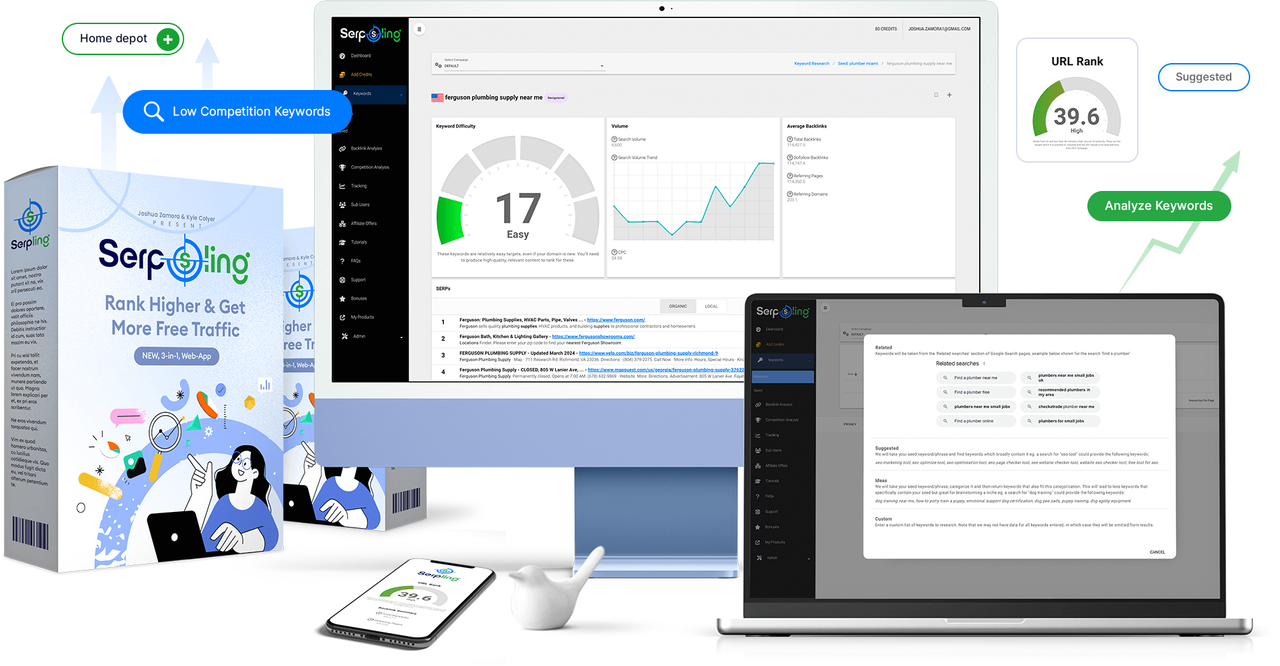
SerpSling AI Agency is an audit-to-deployment AEO (Answer Engine Optimization) platform. Its job is to help your website — or your client's website — become visible inside AI-powered search answers.
It does three things:
First, it audits a website and tells you exactly why AI engines are ignoring it. That includes missing structured data, weak entity signals, content that doesn't match how buyers prompt AI assistants, and gaps in local trust signals.
Second, it gives you done-for-you optimization tools to fix those issues. The biggest piece of that is schema injection — adding invisible code to your pages that helps machines understand your business clearly. It also helps you build content blocks (like FAQs and "Why Choose Us" sections) in formats AI engines love to pull from.
Third, it lets you deploy those changes fast — without touching code manually — and then generates reports you can hand to a client or use to track progress over time.
The "Agency" part of the name is important. This is not positioned as a one-person hobbyist tool. It's built so you can use it across multiple businesses, package it as a monthly service, and charge clients recurring fees for AI visibility optimization.
Let me be clear about what it is NOT:
It is not a content spinner. It is not a backlink builder. It is not a traditional SEO suite. It does not replace your keyword research tools or your content creation workflow. It fills a gap that those tools don't address — the gap between "ranking on Google" and "being recommended by AI."

Why I Tested It Like an Agency Would
Even though I could have just tested SerpSling on a single site and called it a day, I deliberately approached it with an agency mindset. Here's why.
If a tool can only handle one site gracefully, it's a hobby tool. If it can handle multiple sites with a repeatable process, it's a business tool. I wanted to know which one SerpSling actually is.
So I focused on three questions during my testing:
How fast can I move from audit to action? In agency life, speed is margin. If a tool makes you faster without sacrificing quality, it's printing money. If it slows you down with confusion, it's costing you.
Can a team member use this, or does it require deep technical knowledge? Agencies don't scale when the founder has to touch every deliverable. I needed to know if a trained VA or junior team member could run this workflow reliably.
Does the output look professional enough to show a client? Reports, audits, and recommendations need to be clear enough that a non-technical business owner understands what happened and why it matters. If the output is a mess of jargon, the tool fails as an agency asset.
I ran it through a handful of different sites across different niches — local services, an e-commerce brand, and a professional services firm. Each one gave me a slightly different perspective on where SerpSling shines and where it falls short.

The AI Visibility Audit: Where It Immediately Proves Its Value
The audit is the first thing you do inside SerpSling, and honestly, it's the feature that sold me on the concept before anything else.
Here's why.
Most business owners have no idea why they're invisible in AI answers. They assume the problem is "we need more blog posts" or "we need more backlinks." Sometimes that's true. But more often, the real problem is much simpler and much more fixable: the AI cannot confidently identify what the business actually is.
Think about that for a second. You might have a beautiful website with great copy and strong testimonials. But if the AI engine cannot cleanly extract your business name, your service categories, your location, your hours, your specialties, and your proof points — it will not recommend you. It can't. It doesn't have enough confidence.
The SerpSling audit is built to surface exactly those gaps.
In my testing, here's what it looked at:
Entity clarity — does the website clearly and explicitly state what the business is? Not in a clever tagline. Not in a paragraph buried on the About page. In structured, machine-readable terms that an AI can grab and use.
Schema coverage — is the site sending structured data signals about the organization, the services, the FAQs, the reviews? Most sites I audited had partial schema at best. Some had conflicting schema from multiple plugins fighting each other.
Local trust signals — is the business name, address, and phone number consistent? Do the local signals match what's on Google Business Profile, Yelp, and other directories?
Content format gaps — does the site answer the kinds of questions buyers actually ask inside AI assistants? Or is the content written in a style that works for blog readers but gives AI engines nothing to extract?
Trust and reputation signals — are reviews and proof points visible in a way an AI can summarize? Or are they hidden in image testimonials and PDF case studies the bot can't read?
Technical health — can the site even be crawled properly? Are there errors blocking the AI from accessing the content it needs?
The audit doesn't just list these issues. It reframes the entire conversation.
For agencies, this is gold. When you can sit down with a business owner and show them — visually, clearly — exactly why ChatGPT is recommending their competitor instead of them, the dynamic changes instantly. You're not selling "SEO services." You're diagnosing a specific visibility problem they can feel in their revenue. That's a much easier conversation.
👉 Click Here to Get SerpSling AI Agency + My Exclusive Bonuses
Going From "Here's What's Wrong" to "Here's It Fixed" — Where Most Tools Fail and SerpSling Tries to Win
I've used a lot of audit tools over the years. Most of them do the same thing: they hand you a list of problems and then wish you good luck.
That's where SerpSling tries to separate itself. It doesn't just diagnose. It provides a path to implementation.
The biggest piece of that implementation layer is schema injection.
Now, I know schema sounds boring and technical. And honestly, it is. But it's also one of the single most effective things you can do to help AI engines understand your website. Schema is invisible code that tells machines exactly what your content represents — your business type, your services, your location, your reviews, your FAQ answers, your articles. Without it, the AI is guessing. With it, the AI has a cheat sheet.
The problem is that schema work has always been a pain. You either need a developer who understands JSON-LD, or you end up using a plugin that adds generic schema that doesn't actually match your pages. Or worse, you end up with conflicting schema from multiple plugins, which confuses the AI even more.
SerpSling's approach is what I'd call "schema injection with purpose." You're not just throwing Organization schema on the homepage and calling it a day. The tool helps you target the right type of schema to the right pages — service schema on service pages, FAQ schema where the questions live, local business schema where location matters.
The targeting piece is critical. If you blast the same schema everywhere, you create noise. If you apply it surgically, page by page, you create a clean signal map that AI engines can follow.
I also want to mention the preview feature. Before you push any schema live, you can see exactly what's going to be deployed. For agencies, this is a huge deal. You do not want to push code to a client's live site and find out it broke their existing Yoast or RankMath setup. The preview lets you catch conflicts before they become problems.
This matters a lot in the real world. I've seen agencies lose clients because a plugin update broke something on the site. Having a safety layer is not a luxury — it's a requirement if you're doing this professionally.

The Content Layer AI Engines Actually Want to Pull From
Schema gets you the structural foundation. But AI engines also need content they can extract and summarize quickly. And the format of that content matters more than most people realize.
Let me explain what I mean.
When a buyer asks an AI assistant a question like "What should I look for when hiring a roofing company?" — the AI scans pages looking for a direct, clear answer. If your website has a 2,000-word blog post about roofing that buries the answer in paragraph seven, the AI might skip it entirely. But if your site has a clean FAQ block that says:
Q: What should I look for when hiring a roofing company?
A: Look for proper licensing, insurance, local references, written estimates, and warranty details.
...the AI grabs that instantly. It's clean. It's direct. It's structured. It's exactly what the machine wants.
SerpSling helps you build and deploy these FAQ blocks across your key pages. And it's not just FAQ blocks. There are "Why Choose Us" sections that serve a different but equally important purpose.
Here's the thing — AI assistants are not just listing businesses. They're recommending them. And to recommend your business over someone else, the AI needs justification. It needs proof points it can cite. Things like years of experience, service guarantees, specializations, awards, review counts.
When you deploy a "Why Choose Us" block that clearly states these proof points in a structured format, you're giving the AI ammunition to justify choosing you. Without that, the AI has no reason to prefer you over a competitor whose site provides that information clearly.
I tested deploying both FAQ blocks and trust-signal blocks on a local service site. The difference in how the pages read — from a machine perspective — was dramatic. Before, the site was a collection of nice-sounding paragraphs. After, it was a structured answer engine that AI assistants could actually work with.
Did that immediately get the site cited in ChatGPT answers? No. I'll talk about realistic timelines later. But it moved the site from "ineligible" to "eligible," which is the first hurdle you have to clear.
Local Domination: The City + Service Page Strategy
If you work with local businesses — or you are a local business — pay close attention to this section. Because local prompts are where AEO gets really interesting, and really profitable.
People are constantly asking AI assistants location-specific questions:
"Best emergency plumber in Miami"
"Top dentist for kids near me"
"Who does the best kitchen remodeling in Austin?"
"Cheapest CCTV installation in my area"
These are buying prompts. The person asking is not doing academic research. They want a name, a phone number, and a reason to call. And the AI is happy to provide all three — as long as it has a source it trusts.
SerpSling has a feature for building location-specific pages — city + service combinations with schema and content structure already baked in. For agencies, this is a revenue multiplier. A plumber who serves six cities? That's six location pages, each targeting specific local AI prompts.
But here's where I need to be honest.
Location pages can go wrong fast. If you crank out twenty city pages that are basically the same content with the city name swapped, you're creating garbage. AI engines are smart enough to recognize thin, duplicated content, and Google has been penalizing that approach for years. The AI layer doesn't change that — it makes quality even more important.
What I looked for in SerpSling's approach was whether the output felt like genuine answer-first content or like old-school keyword stuffing with a fresh coat of paint.
When done right — with unique service details, local proof points, area-specific FAQs, and real trust elements — these pages become serious assets. They answer the exact questions buyers are asking AI assistants, structured in the exact format those assistants prefer.
When done lazily, they're a liability.
So if you use this feature, commit to quality. Add real local details. Include genuine proof. Make each page worth reading even if a human lands on it directly. The AI will reward that approach, and so will Google.
Something Most Reviews Skip: Page-Level Targeting and Why It Decides Whether You Get the Call
This is a detail that separates professionals from hobbyists, and I almost never see it discussed in product reviews.
Showing up in an AI answer is only half the battle. Showing up with the RIGHT page is what determines whether that visibility turns into a lead.
Here's what I mean.
If someone asks an AI assistant about emergency plumbing, and the AI recommends your business but links to your generic homepage — you've lost friction. The user lands on a page that talks about everything you do, and they have to hunt for emergency-specific information. Many of them will bounce.
But if the AI links to your dedicated emergency plumbing page — with pricing details, response times, service area, and a click-to-call button — that's a conversion.
SerpSling's smart targeting rules let you attach specific schema and content blocks to specific pages. That means you're not just making your site AI-readable in general. You're mapping specific prompts to specific pages.
Emergency plumbing prompt → emergency plumbing page.
Orthodontics for kids prompt → pediatric orthodontics page.
Commercial CCTV installation prompt → commercial services page.
This precision matters for conversion, and it matters for how the AI evaluates your site. When the AI sees a tight match between the prompt and a dedicated, well-structured page, it gains confidence in recommending you.
For agencies, this feature is what turns AEO from a vague concept into a concrete, measurable service. You're not just "optimizing for AI." You're mapping buyer prompts to conversion-ready pages. That's something a client can understand and pay for.
My Actual Results — What Improved and What Still Needs Time
Alright, let's talk about what actually happened when I used SerpSling across my test sites. Because I know this is the section most people are scrolling to find.
I'm going to break this into two buckets: what changed immediately and what's still developing.
Immediate Operational Wins
Speed was the biggest win. The audit-to-deployment workflow genuinely reduced the time it takes to implement AEO fundamentals. On one local service site, I went from "zero AI optimization" to "full schema coverage, FAQ blocks on all service pages, and three location pages deployed" in less than a day. Doing that manually — writing JSON-LD, testing it, adding content blocks, formatting everything — would have taken me three or four days minimum.
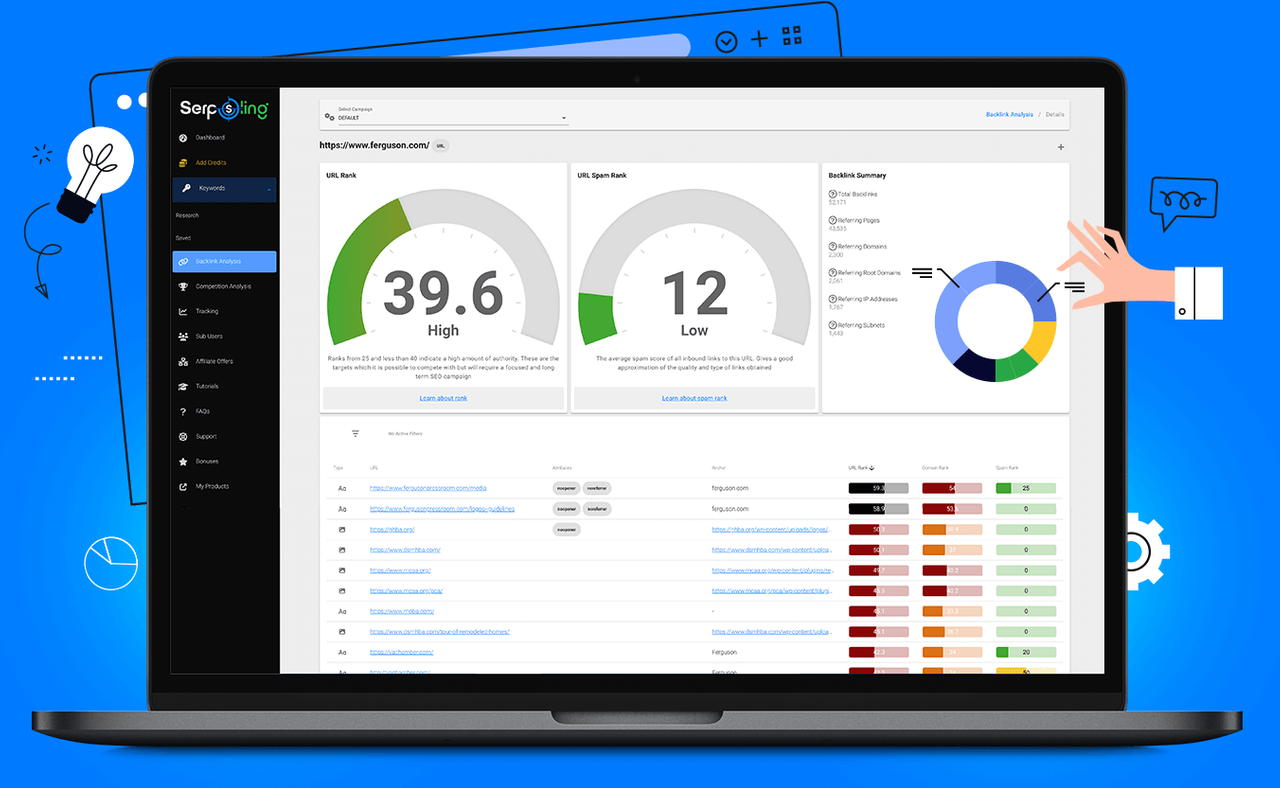
Clarity was the second win. Before running the audit, I was guessing at what the site needed. After the audit, I had a specific list of gaps. No guessing. No "maybe we should try this." Just clear problems with clear fixes. That's worth the price of admission by itself, especially when you're presenting to a client who needs to understand why they're investing.
The reports looked professional. I could hand a client a document that said "here's why you're invisible, here's what we fixed, here's what's next." That's retention material. That's what keeps clients paying month after month.
Visibility Indicators (Still Building)
Now here's the honest part, and I'm not going to sugarcoat it.
Did the sites I optimized immediately start showing up in every ChatGPT and Perplexity answer? No. They did not.
AEO doesn't work like flipping a switch. AI engines need to recrawl your site, reprocess your structured data, and rebuild their understanding of your business. That takes time. How much time depends on your niche, your existing authority, how competitive the prompts are, and which AI engine you're checking.
What I did see was that the sites became measurably more machine-readable. The structure was cleaner. The entity signals were clearer. The FAQ content was in extractable format. The schema was comprehensive and accurate.
These are eligibility improvements. You can't get recommended if the AI can't understand you. So step one is always to become understandable. Step two — actually showing up consistently in answers — builds on that foundation over weeks and months.
If you buy SerpSling expecting to dominate AI answers by next Monday, you will be disappointed. If you buy it expecting a faster, more systematic path to AI visibility, you will get real value.
👉 Click Here to Get SerpSling AI Agency + My Exclusive Bonuses
The Monthly Retainer Play: Where the Real Money Lives
Let me shift gears and talk about the business opportunity here, because for a lot of readers, this is the part that matters most.
AEO is a naturally recurring service. It's not a one-time fix. AI engines update. Competitors optimize. New prompts emerge. Buyer behavior shifts. That means businesses need ongoing work to maintain and improve their AI visibility.
If you position yourself as the person who handles that ongoing work, you have a monthly retainer service that practically sells itself — because the client can feel the problem in their lead flow.
Here's what a realistic monthly package could look like:
Monthly AI visibility audit and progress report — show the client where they stand, what improved, and what's next.
Schema and entity optimization updates — as the business adds services, opens new locations, or gets new reviews, the structured data needs to be updated.
New answer-format content pages — publish fresh FAQ pages, service comparisons, and buyer-guide content that targets the prompts people are actually asking AI assistants.
Location page expansion — gradually build out city + service pages to capture new local AI prompts.
Trust signal improvements — help the client get more reviews, display them properly, and structure their proof points for AI extraction.
Competitor gap analysis — show the client what their competitors are doing better and where opportunities exist.
You could charge anywhere from $500 to $2,000 per month for a package like that, depending on the client's size and the competitiveness of their market. And the beauty is that SerpSling's audit reports and deployment tools make fulfillment fast enough that your margins stay healthy.
This is not a hypothetical business model. This is the direction search marketing is heading. Agencies that add AEO services now — while most competitors are still confused about what AEO even means — will own the category in their market. By the time everyone else figures it out, you'll already have the clients locked in.

Full Pricing Breakdown — Every Package, Every Upgrade, Straight Talk
JVZoo funnels can feel overwhelming. Multiple packages, upsells, countdown timers, coupon codes — it's a lot. So let me lay out exactly what each tier gets you, what the upgrades add, and what I'd actually recommend at different budget levels.
Front-End Packages
SerpSling Starter — $67 54.95(One-Time)
You get 250 credits, the full keyword discovery and competition analysis engine, backlink analyzer, affiliate offer finder, SpinReWriter AI access, and a personal use license. Important: no Agency License at this tier. You can use it for your own sites, but not officially for client work.
SerpSling Mid — $77 64.95(One-Time)
Everything in Starter, but with 500 credits and the Agency License included. Regular updates and priority support. The $10 jump from Starter is a no-brainer because the Agency License opens up the entire client-service revenue model.
SerpSling Pro — $97 24.95 (One-Time)
The full package. 1,500 credits — six times the Starter tier. Agency License included. First-access to new features and updates. Priority support.


My Honest Recommendation on Packages
If budget is tight: Get Mid at $77. Not Starter. The Agency License alone is worth the extra ten bucks, because without it, you're cutting off the most profitable use case for the tool. One client engagement at a few hundred dollars covers the cost and then some.
If you're building an agency or doing serious SEO work: Go Pro at $97. The 1,500 credits give you serious runway across multiple campaigns and clients. At a one-time payment, the math is hard to argue with when comparable tools charge that amount monthly.

The Upgrades (OTOs)
Upgrade 1 — Lock Your Discount + Double Credits + Rank Tracker ($1 to start)
Locks your discounted rate permanently, doubles your credits, and adds keyword rank tracking. For a dollar to start, this is almost impossible to pass up. The rank tracker alone adds real functionality you'd pay for separately.
Upgrade 2 — Website Auditing + Sub-User Licenses ($37 One-Time)
Adds full website auditing capability plus up to 5 VA accounts. At $37 for both, this is probably the most underpriced upgrade in the entire funnel. If you're running any kind of team, the sub-user licenses save you hours every week.
Upgrade 3 — DFY Authority / Expired Domain Finder ($47 One-Time)
A bot that finds high-value expired domains available at registration price. Powerful if you understand expired domain strategy. If you don't, skip it for now and come back later when you're generating revenue from the core platform.
Upgrade 4 — DFY Suite / Done-For-You Link Building ($67 One-Time)
Handles backlink building through Web 2.0s, citations, embeds, and more. If link building is the part of SEO that makes you want to quit, this removes that pain. Combined with SerpSling's keyword research, it creates a complete ranking workflow.
Launch Bonuses (Available During Launch Window Only)
- Agency Rights ($197 value)
- WP Monetization Plugin ($97 value)
- Affiliate Offer Finder ($197 value)
- Traffic & Authority App ($97 value)
- SpinReWriter AI Access — 14 days free ($197 value)
All launch bonuses disappear when the launch window closes. There's a 30-day money-back guarantee on everything, so the risk is basically zero.
👉 Click Here to Check Current Pricing + My Full Bonus Stack


Where SerpSling Falls Short — And What No Tool Can Fix For You
I promised you an honest review, and honest means talking about the limitations too.
No tool controls AI engines. SerpSling can make your site more understandable and more eligible for AI recommendations. It cannot force ChatGPT or Perplexity to pick you. AI visibility fluctuates. Different engines cite different sources. Some prompts will feature you; others won't. That's the reality of an evolving landscape.
Schema is not a magic wand. It helps AI understand you, but it doesn't create credibility out of thin air. If your business has two reviews and a confusing service description, no amount of structured data will make the AI recommend you with confidence. You still need real reviews, real proof, and real authority.
Content quality still matters. If you use SerpSling to deploy FAQ blocks and location pages that are generic and thin, AI engines may ignore them entirely. The tool gives you the structure. You still need to fill that structure with substance.
WordPress plugin conflicts are real. If you're already running Yoast, RankMath, or another schema plugin, you need to be careful about double schema and conflicting markup. SerpSling's preview feature helps, but you should always test on a staging environment before pushing changes to a live client site.
"One-click deployment" requires professional judgment. In an agency setting, always have backups. Always have the ability to roll back changes. Don't blindly push code to a client site without checking what's being deployed.
AEO is not instant. I keep coming back to this because it's the most common source of disappointment. If you expect to buy SerpSling today and show up in every AI answer by Friday, you will be frustrated. AEO is a cumulative process. The first month is about building the foundation. The second and third months are about expansion and iteration. Consistent visibility builds over time.
The tool accelerates professional work. It does not replace professional thinking.

Who Should Buy SerpSling AI Agency
Agencies and freelancers who want to add a new monthly service line that clients are already asking about. If you sell SEO or local marketing services, AEO is the next logical offering — and right now, almost nobody in your market is providing it.
Local service businesses where lead value is high. Plumbers, roofers, dentists, lawyers, HVAC companies, remodelers — any business where a single new client is worth hundreds or thousands of dollars. Being recommended by AI assistants in your local market can change your revenue trajectory.
Marketers who see the shift happening and want to position themselves early. The window to become the go-to AEO provider in your niche or your local market is open right now. It won't stay open forever.
Anyone ready to commit to a monthly improvement cycle. AEO rewards consistency. If you're willing to run monthly audits, publish new content, expand location pages, and iterate — the results compound.
Who Should Save Their Money
If you don't control your website, you can't deploy the changes SerpSling recommends. Skip it until you have access.
If you want instant results without ongoing effort, this is not the right tool. AEO is a process, not a button.
If you're not going to invest in content quality alongside the tool, the structure it provides will be empty. AI engines can tell the difference between a genuinely helpful page and a template with the city name swapped.
If you're running a highly custom tech stack and don't want WordPress plugins or guided deployment tools, you might prefer a manual technical approach. SerpSling is built for WordPress-based workflows.

If You Buy It, Here's How I'd Spend the First Two Weeks
Week One:
Run the audit on your most important service pages. Don't try to optimize everything at once. Pick the pages that represent your highest-value services and start there.
Fix entity clarity first. Make sure the AI knows exactly what your business is, what you offer, and where you operate. Deploy organization and service schema on those core pages.
Add FAQ blocks targeting real buyer questions. Not "What is plumbing?" — but "How much does emergency plumbing cost at night?" and "What should I look for when hiring a plumber?" Pull these from actual questions buyers ask in AI assistants.
Week Two:
Build your first batch of location pages. Quality over quantity. Start with two or three cities, not twenty. Make each one unique with local details, specific service information, and area-relevant proof points.
Strengthen trust signals on your key pages. Pull reviews to the forefront. Add "Why Choose Us" blocks with specific, verifiable claims. Make these easy for machines to summarize.
Generate your first client-facing report. Even if you're doing this for your own business, practice creating the report. It forces you to articulate what changed and what's next — which is exactly the skill you need if you plan to sell this as a service.
Ongoing:
Run monthly audits. Compare against competitors. Identify new gaps. Publish new answer-format content targeting buyer prompts you haven't addressed yet. Expand location pages gradually. Update schema as the business evolves.
This is how you build a system. Not a one-time project. A system.




🎁 My Exclusive Bonus Stack — Built for People Who Want to Monetize SerpSling Faster
If you grab SerpSling AI Agency through my link, I've put together a bonus package specifically designed to help you turn this tool into revenue faster. These aren't random PLR ebooks. They're practical, agency-focused resources.
Bonus #1 — The "AI Visibility" Client Pitch Deck
A done-for-you slide deck you can use to explain AEO to local business owners. It breaks down the problem in plain English and naturally leads to your monthly service offer. No pushy sales tactics — just clarity that sells.
Bonus #2 — The Local AEO Pricing Guide
How much should you charge? $500? $1,500? $2,500? This guide breaks down how to package and price your AEO services based on client size, market competitiveness, and service scope. Stop guessing at pricing.
Bonus #3 — 50 High-Intent AI Prompts for Local Businesses
A swipe file of the exact questions buyers are typing into ChatGPT and Perplexity for local services. Use these to build your FAQ blocks and location pages inside SerpSling. Saves you hours of prompt research.
Bonus #4 — The Client Onboarding Questionnaire
The exact questions you need to ask a new client before running your SerpSling audit. This ensures you gather all their trust signals, service details, location data, and proof points upfront — so the audit and optimization are accurate from day one.
Bonus #5 — The Monthly AEO Reporting Template
A clean, professional template for delivering monthly progress reports to clients. Shows what was audited, what was fixed, what improved, and what's planned next. This template alone can reduce client churn because it makes your value visible every single month.
👉 Click Here to Claim Your Bonuses and Get SerpSling AI Agency Now
Final Verdict: Is SerpSling AI Agency Worth It?
Here's where I land after testing this tool across multiple sites and approaching it with an agency mindset.
SerpSling AI Agency is worth buying if you understand what it is and what it isn't.
It is a structured, practical AEO workflow that takes you from "I don't know why the AI is ignoring me" to "I know exactly what's missing and I've deployed the fixes." It makes the process of becoming AI-visible faster and more systematic than doing everything manually.
It is NOT a magic button that guarantees you'll show up in every AI answer by tomorrow. No tool can promise that, and anyone who tells you otherwise is lying.
My strongest results were in speed of implementation, audit clarity, and the ability to deploy AEO fundamentals without drowning in technical work. It gave me a clear roadmap instead of guesswork, and it made the process repeatable enough to sell as a monthly service.
The agency opportunity is the real story here. AEO is a new service category. Most businesses don't understand it yet, but they're feeling the effects — leads are dropping, and they don't know why. If you can be the person who explains the problem and delivers the fix, you own that client relationship for a long time.
The 30-day money-back guarantee removes the risk. The one-time pricing during launch makes the math easy. And the timing is ideal — because the businesses that optimize for AI visibility now will become the default recommendations while everyone else is still confused.
If you're serious about this, don't treat SerpSling as a set-and-forget purchase. Treat it as the starting point of a monthly visibility system. Run audits. Deploy fixes. Publish content. Expand. Iterate. Report. Repeat.
That's how you win in AEO. And that's how you build a business that grows alongside the AI search shift instead of getting crushed by it.
👉 Click Here to Get SerpSling AI Agency + My Exclusive Bonuses
One final thought. The shift toward AI-powered search answers is not slowing down. It's accelerating. Every month, more buyers skip traditional search results and ask an AI assistant instead. The businesses that show up in those answers will capture the leads. The ones that don't will wonder where their traffic went.
You can be on either side of that equation. The tools exist. The opportunity is here. What you do with it is up to you.

Affiliate Disclosure: This post contains affiliate links. If you purchase through my link, I may earn a commission at no extra cost to you. Everything you read below is based on my personal experience with the product. I will be straight with you about what works, what doesn't, and who should skip it entirely.
a